Voters Say Trump and Congress Aren't Taking AI Risks Seriously, Poll Finds
A new Reuters/Ipsos poll found 57 percent of registered voters think the Trump administration isn't taking AI risks seriously enough. A bipartisan majority wants stricter regulation, and AI has become a midterm campaign issue.
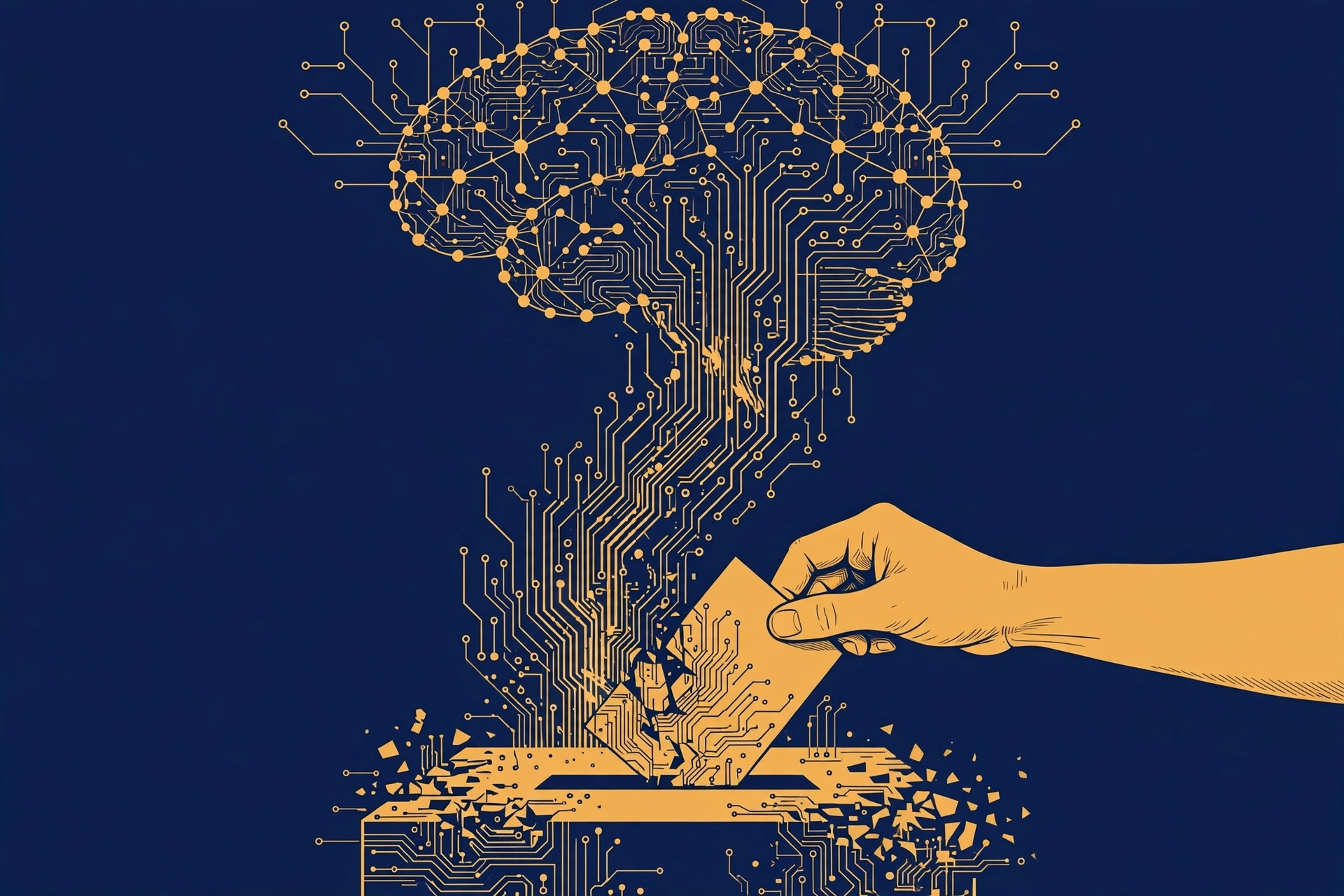
Most voters think the Trump administration and Congress are not taking the risks of artificial intelligence seriously enough. They want the government to write new rules for the technology.
That is the finding of a new Reuters/Ipsos poll, conducted over six days and ending Monday. 57 percent of registered voters said the administration has not taken AI risks seriously enough or at all. 54 percent said the same about Congress.
The doubt cuts across party lines. A third of self-identified Republicans said the administration isn't taking AI risks seriously enough. A bipartisan majority — 80 percent of Democrats and 61 percent of Republicans — said they support stricter government regulation of AI.
62 percent of voters said AI could get out of control and put the future of humankind at risk. That matches the share who said the same in a Reuters/Ipsos poll in August 2025.
Jobs are the sharpest worry. 84 percent said AI is a threat to American workers. For comparison, 60 percent said the same about illegal immigration, 74 percent about competition from foreign workers, and 73 percent about large corporations.
The data centers that power AI are unpopular too. 56 percent of voters backed limits on building them, including 69 percent of Democrats, 55 percent of independents and 43 percent of Republicans. The building boom has become an issue in congressional and statewide races, with candidates from both parties urging a pause.
Voters are also uneasy about AI in war. 57 percent said the U.S. government should not use AI to choose the target of a military strike, up from 49 percent last August.
Trump has voiced strong support for AI and for building data centers. He has said they are vital to American competitiveness, and that restrictions would let China pull ahead. AI safety advocates call that reasoning misguided.
Last week Trump announced that executives from six leading AI companies — Nvidia, SpaceX, OpenAI, Anthropic, Meta and Google — had agreed to a set of voluntary safety principles, including audits by independent reviewers. The agreement carries no stated penalty if a company does not comply.
A White House official told Reuters the administration's priority is a booming economy, so workers have many opportunities and face limited volatility from short-term disruptions. The official pointed to Trump's new task force charged with keeping America the world leader in the technology.
Daniel Kokotajlo, a former OpenAI staffer who quit in 2024 over safety concerns, said the more pressing fear is that AI costs people jobs or threatens health and safety — not the far-future scenarios.
Little has come of federal calls for action so far. Figures as far apart as Senator Bernie Sanders and Trump ally Steve Bannon have called for it. Congress has not agreed on legislation, and lawmakers are expected to be out of Washington until after the November 3 midterms. AI has become a significant campaign issue as control of Congress hangs in the balance.
The poll surveyed 4,506 U.S. adults, including 3,526 registered voters, online and nationwide. The margin of error is 2 percentage points.