Czech Parliament Advances Media Overhaul in Overnight Vote
The bill would scrap the household broadcasting fee and fund Czech Television and Czech Radio from the state budget. Critics say it would weaken their independence. The government says it would ease costs.
The Czech parliament pushed a sweeping change to public media funding through its first hurdle in the early hours of Saturday. The governing coalition's majority voted at 4:36 a.m. to send the bill to committees for further discussion. It is not yet law.
The bill would scrap the 205-crown ($9.45) monthly household broadcasting fee. Czech Television and Czech Radio would instead be funded directly from the state budget. Nominal funding would stay unchanged for several years, and the proposal would cut funding for the two broadcasters by about 15%, possibly as early as next year, according to Reuters.
How the vote happened
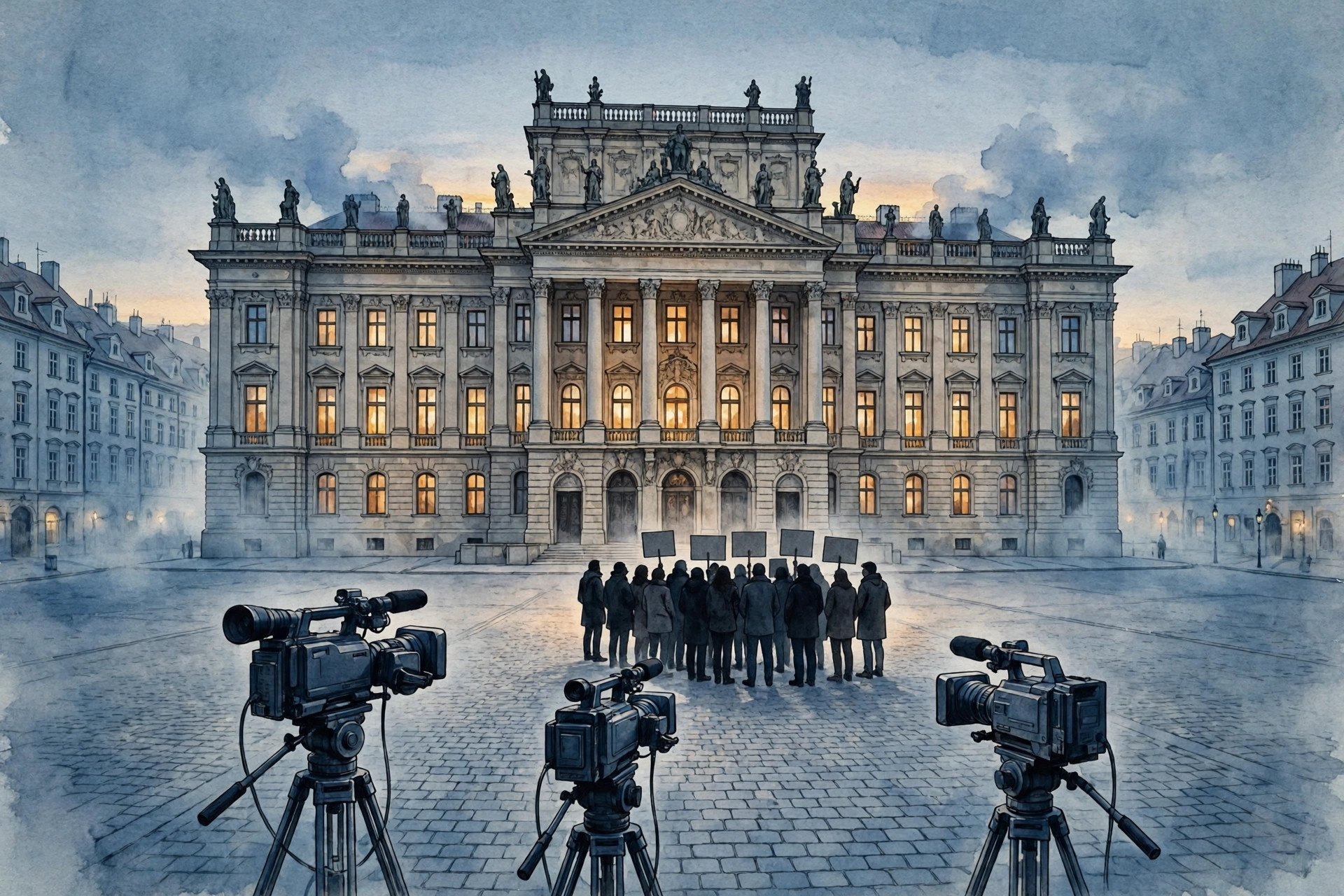
The proposal was brought to the floor outside the planned order of proceedings on Friday. Speaker Tomio Okamura, of the SPD party, limited debate and set the vote for 4:36 a.m. on Saturday. Hundreds of protesters gathered outside parliament, with some remaining overnight. Local media reported that several people unsuccessfully tried to enter the building.
According to Czech media reports cited by Prague Daily, the fixed timetable prevented 65 registered members of parliament from speaking. The opposition criticised the procedure and accused the government of restricting parliamentary debate.
The two sides
The government says the change would ease costs for households by ending the monthly fee. Prime Minister Andrej Babis said on Facebook late on Friday: “There is no war for independent media. There is no fight for democracy and no nationalisation of media is being prepared.”
Critics say funding the broadcasters from the state budget would leave them more vulnerable to political pressure. Czech Television is the country's most-watched broadcaster across major age groups, and public media are among the most trusted news sources in the country, according to a 2025 Reuters Institute survey. Opposition parties have compared the proposed changes with media reforms in Hungary under former Prime Minister Viktor Orban, who oversaw a major expansion of pro-government media.
What comes next
The civic initiative Milion chvilek pro demokracii has called a demonstration in Prague's Old Town Square for Sunday at 4 p.m. The group says the switch to state funding would leave the two broadcasters with about 1.4 billion crowns less each year. The bill still has to pass through committees and further readings before it can become law. Sunday's protest will be the first measure of how far the dispute travels beyond parliament.