France Deploys 70,000 Police for a Fresh Day of Protests
The Louvre and other Paris museums closed, shopkeepers boarded up storefronts, and police used tear gas in Lyon as a second wave of protests over living costs got underway, a week after marches turned violent.
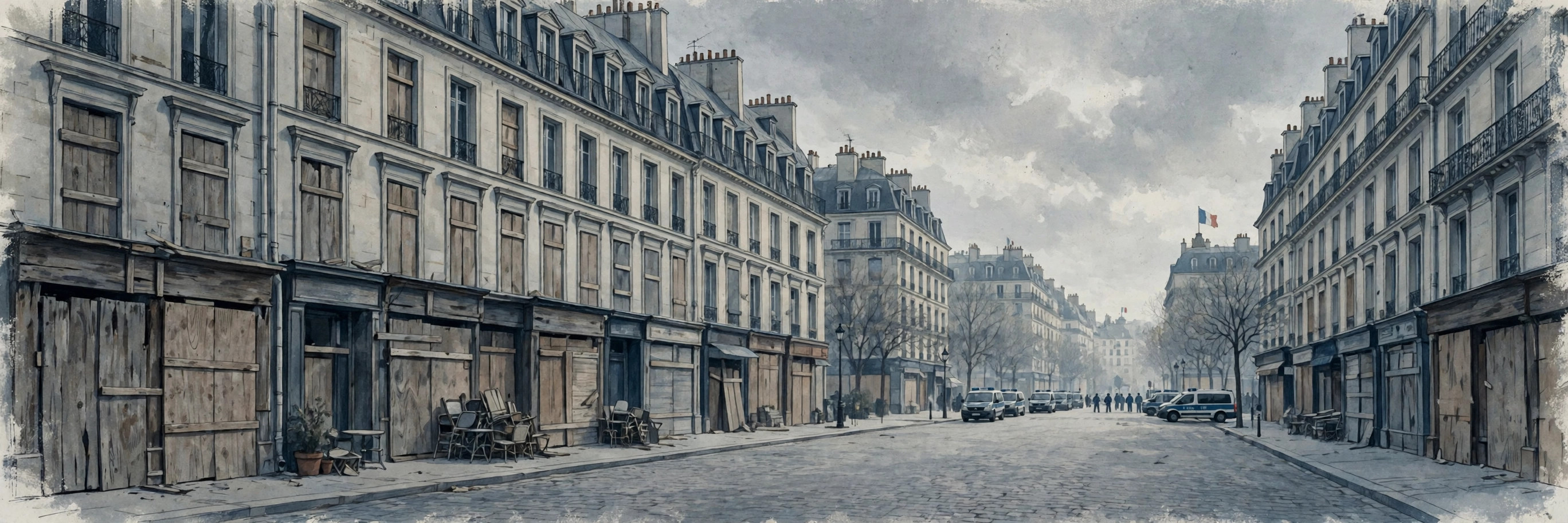
France deployed about 70,000 police officers and gendarmes across the country on Saturday as a second wave of protests over the cost of living got underway. It is 10,000 more officers than were on duty for last weekend's demonstrations, which ended in vandalism and looting.
Interior Minister Laurent Nuñez told police in Paris to be ready for a long day. He said officers would face attempts to target shops, public institutions and security forces.
“We have to be ultra, ultra responsive. We have significant calls for disruption from political groups and quite simply from criminals,” he said. “It is going to be a long day.”
Soldiers from an anti-terrorism military unit patrolled the Champs-Élysées in the morning. Police vans circled the Arc de Triomphe. In Lyon, police used tear gas to disperse demonstrators on Saturday morning.
Museums shut, shops boarded up
Several of Paris's best-known cultural institutions closed for the day. The Louvre, the Musée d'Orsay and the Opera House shut their doors, along with the Musée de l'Orangerie, the Picasso Museum and the Grand Palais. The Culture Ministry said the closures were preventive, to protect visitors, staff and works of art. More than 20 metro stations were also shut.
The Art Basel contemporary art fair at the Grand Palais cancelled its final two days as a precaution.
Many shopkeepers boarded up storefronts, and business groups urged stores to stay closed. Thousands of shops and businesses were damaged or looted across France last weekend, when about 550,000 people marched and more than 1,200 were arrested.
A row over the Paris route
The location of Saturday's main Paris march was disputed until the last minute. The Paris police prefecture moved the route from Bastille to Nation, in the east of the city, to a new route from Porte d'Italie to Porte de Vincennes, further out toward the southeastern edge of the capital. The prefecture said the original route posed serious risks because of the concentration of businesses like those targeted the previous weekend.
The change angered some on the left. Jean-Luc Mélenchon, leader of the hard-left France Unbowed party, wrote on X that those in power were creating disruption for the marches and imposing impossible deadlines for organisers to reorganise.
Unions ultimately agreed to the revised route, with the march set to begin at 2 p.m. local time.
Restrictions across the country
Authorities sharply restricted demonstrations across much of France. Marseille reversed an earlier ban and authorised a union march. Protests remained restricted in central Lyon. Union rallies also went ahead in Strasbourg.
Bans stayed in force in several other cities, including Nancy, Metz, Besançon, Belfort, Rouen, Le Havre, Toulon and Limoges. Courts suspended restrictions in Limoges and several municipalities around Marseille, while other bans stood.
The first authorised march of the day began mid-morning in Orléans, about 120 kilometres south of Paris, against the far-right National Rally, which is holding a congress in the city this weekend. Bally Bagayoko, the mayor of Saint-Denis and a member of France Unbowed, was among those marching.
“We have come to tell the far right, face to face, that we are not afraid,” he said.
Why people are marching
The protests are driven by anger over living costs and strained public services, and by demands over conditions in schools. Students, workers and unions have taken to the streets in recent weeks, joined by activists from the yellow vest movement, whose demonstrations against social inequality shook France in 2018 and 2019.
Authorities say radical militants and bands of young looters exploited last weekend's marches to sow chaos. Protest organisers say the movement is peaceful and blame the government for failing to address the cost of living.
Tensions were heightened by a shooting west of Paris on Friday in which a gunman killed one person and wounded four others, including a 12-year-old girl. President Emmanuel Macron called that attack a racist terrorist act, and investigators are examining the terrorist lead.