Student Protests Sweep Across France as PM Calls a Crisis Meeting
On Thursday the demonstrations spread from high schools to universities, a headteacher was doused in petrol in Marseille, and Prime Minister Sébastien Lecornu told his ministers to cancel their travel.
PARIS — France’s prime minister convened a crisis meeting on Thursday as student protests over crumbling schools spread from high schools to universities and turned more violent. Prime Minister Sébastien Lecornu asked his ministers to cancel their planned travel so the government could focus on the unrest.
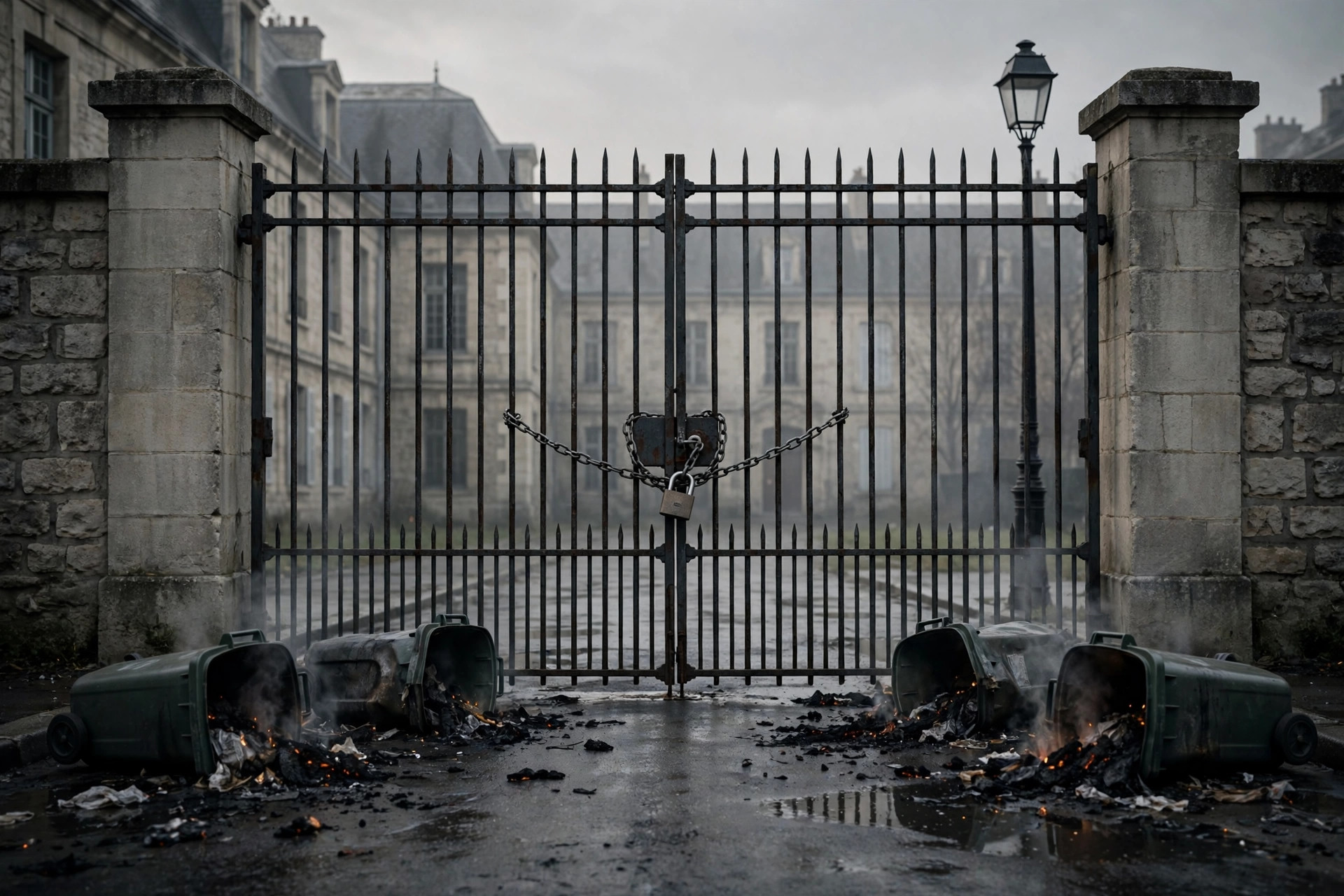
Attackers doused a headteacher in petrol and started fires in at least two schools on Thursday, Reuters reported. The headteacher of the Victor Hugo high school in Marseille was injured, the prosecutor’s office said, without giving more details. In the same city, hundreds of people surrounded a fire truck that arrived to fight a blaze at the Saint-Exupéry high school, forced the firefighters to flee the vehicle, and set it alight, police said. Another fire broke out at the Nelson Mandela high school in Nantes; it was brought under control and no one was hurt, a deputy to the mayor told broadcaster franceinfo. Two other headteachers were injured in attacks in Rouen and Petit-Quevilly, RFI reported.
The demonstrations began last week in Paris-region schools. By Thursday evening, the interior ministry said 1,027 lycées had been affected, with 222 blockaded, and that 1,949 people had been arrested that day, most of them teenagers. The Guardian reported nearly 3,000 students have been detained since the protests began. Education Minister Édouard Geffray said 119 pupils and staff have been injured; RFI reported 83 police and gendarmes were wounded on Thursday alone.
On Thursday, university students joined the movement. The Union étudiante reported about 30 campus blockades, including the Sorbonne, Paris Cité, Strasbourg, Montpellier, Lyon, and Rennes. Geffray ordered schools to hold classes remotely where blockades or damage made buildings unsafe, and said more than 400 schools would stay closed on Friday. Prefects banned demonstrations outside the closed lycées, and the Paris police prefect banned gatherings at 13 closed schools in the capital.
The students’ complaints center on overcrowded classes, teacher shortages, and buildings falling apart. Fadila, 17, a student at the Lycée Paul Éluard in Saint-Denis, told Reuters her school has no windows in its prefab toilets, no water in them, and cockroaches and rats everywhere. The canteen is too expensive, she said, and the prefab classrooms swing from minus 5 degrees Celsius in winter to 40 degrees in summer. School days often run from 8 a.m. to late afternoon.
In Saint-Denis, crowds of young people massed in front of a line of police on Thursday. One student held up a sign: “Can we explain ourselves without being teargassed?” Students have accused the police of heavy-handed tactics, including teargas. Interior Minister Laurent Nunez said troublemakers were moving from school to school to incite violence.
The government condemned the violence but said the schools’ problems should be addressed. Lecornu’s office said the surge in violence made it nearly impossible to keep schools open safely, and that intelligence services described the movement as “an operation organised by LFI and its proxies on the far left.” Manuel Bompard, the coordinator of France Unbowed, said the government was “sinking into conspiracism” and called the mobilisation spontaneous.
The protests overshadowed the release on Thursday of the government’s proposed 2027 budget, which includes a series of deeply unpopular spending cuts. The unrest lands seven months before France elects a new president in May. President Emmanuel Macron, on a state visit to Spain, told reporters on Wednesday: “I understand the anxieties, sometimes the anger that our young people can have.”