Supreme Court Agrees to Decide Whether ICE Can Detain Immigrants Without Bond
The justices will review the Trump administration’s policy of holding immigrants in the country illegally without bond hearings while their deportation cases play out. Nine appeals courts have ruled against the policy; two have ruled for it.
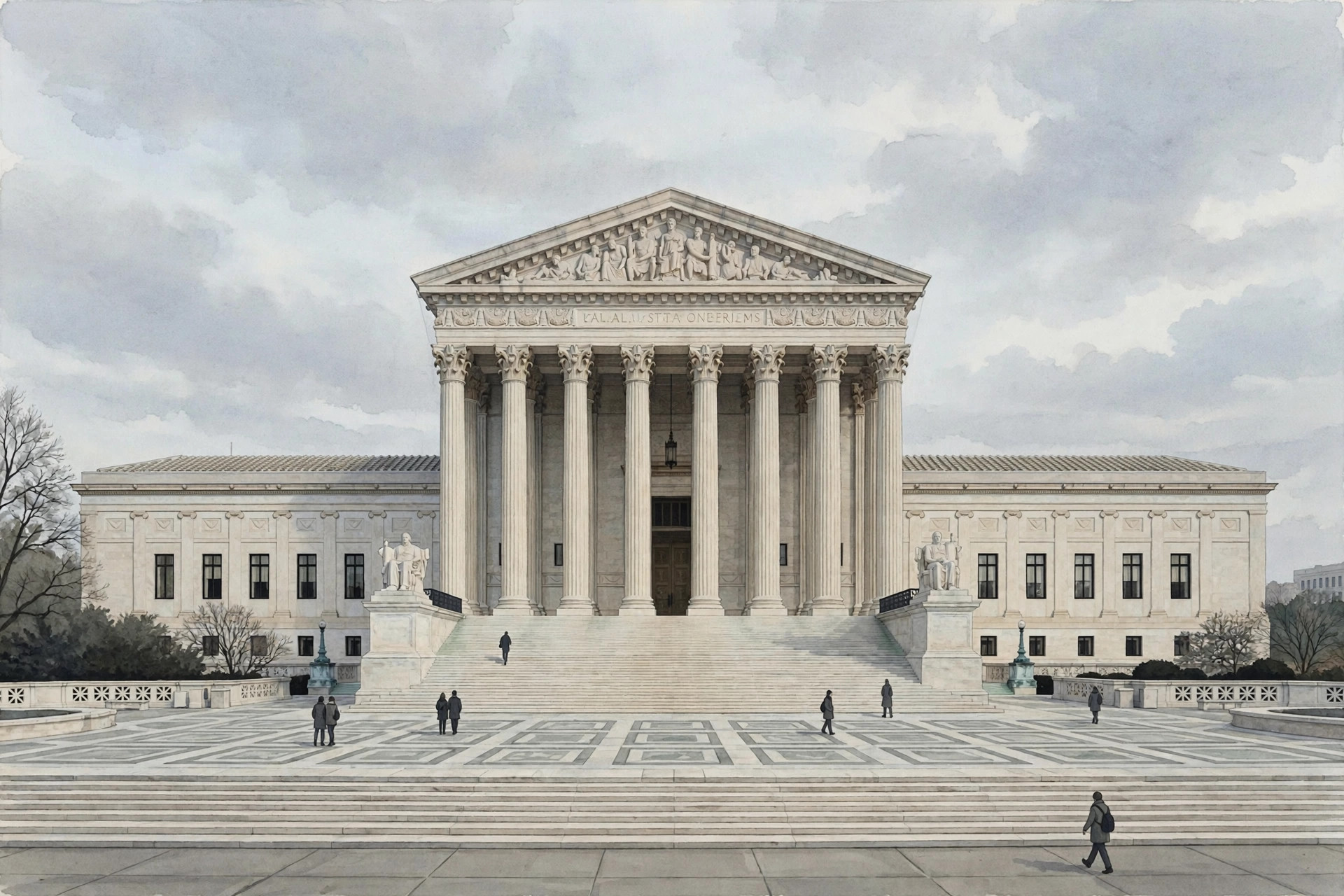
The Supreme Court agreed on Thursday to decide whether the Trump administration can detain immigrants in the country illegally without giving them bond hearings. The case tests one of the administration’s most contested immigration policies.
The question is whether people who entered the United States illegally must stay in detention for the entire length of their deportation proceedings, with no hearing before a judge to ask for release on bond. The administration says the law requires it. Opponents say the government is holding people for months or years on a reading of the statute that federal courts have mostly rejected.
The case the justices took up
The case involves Ricardo Aparecido Barbosa da Cunha, a citizen of Brazil. According to the Associated Press, authorities say he entered the United States illegally about two decades ago and applied for asylum in 2016. He asked for a bond hearing after an immigration judge ruled that his detention was mandatory following his arrest in September 2025.
The administration had asked the court to take up a different but related case involving the broader constitutional questions raised by the policy. The court instead took the da Cunha case.
The policy and the split in the lower courts
In July 2025, the Department of Homeland Security issued new guidance saying immigrants in the country illegally are subject to mandatory detention without a bond hearing for the duration of their deportation proceedings. That broke with a nearly three-decade-old interpretation under which immigrants already living in the United States could be released on bond while their cases moved through immigration court, Reuters reported.
Detention numbers rose from just under 38,000 at the end of the Biden administration to more than 65,000 this past summer, according to CNN. Detainees have filed tens of thousands of lawsuits challenging their detention. Reuters reported in February that hundreds of judges had ruled more than 4,400 times that the administration had detained such immigrants unlawfully.
The lower courts are divided. Judges on nine of the eleven federal appeals courts have concluded that holding immigrants without a bond hearing violates federal law. The 5th and 8th circuits have ruled the other way, holding that immigrants accused of illegally entering and remaining in the United States must stay detained while their cases are pending, the AP reported.
The administration’s argument
In its appeal, the administration said the split was “disrupting the orderly administration of immigration law.” Its lawyers wrote that the result was “an unworkable patchwork of inconsistent immigration enforcement, where aliens present without admission are subject to mandatory detention in some circuits but are entitled to bond hearings and often released in others.” The administration has said the policy keeps people from evading deportation.
The other side’s argument
The American Civil Liberties Union is defending the immigrants in the case. ACLU attorney Michael Tan said, “The policy at issue in these cases is truly a radical break with the law.” Critics of the policy say it pressures people to leave the country on their own, including people with long-pending citizenship applications and people with children born in the United States.
“The administration’s ability to indefinitely detain tens of thousands of noncitizens pending their removal depends entirely on whether its novel reading of the statute is correct,” said Steve Vladeck, a CNN Supreme Court analyst and professor at Georgetown University Law Center, “a reading that has provoked more than 20,000 rulings in the lower courts, the overwhelming majority of which have gone against the Trump administration.”
What happens next
The court will hear the case in its new term, which begins Monday. Immigration is already set to be a central theme of the term; the court is also weighing a significant election appeal over state policies meant to combat noncitizen voting, CNN reported.