Audi to Build Its First U.S. Plant in Georgia, Promising 4,500 Jobs
The $4 billion plant near Macon would build up to 200,000 premium SUVs a year, with production starting in the early 2030s. No cars will roll off the line for years.
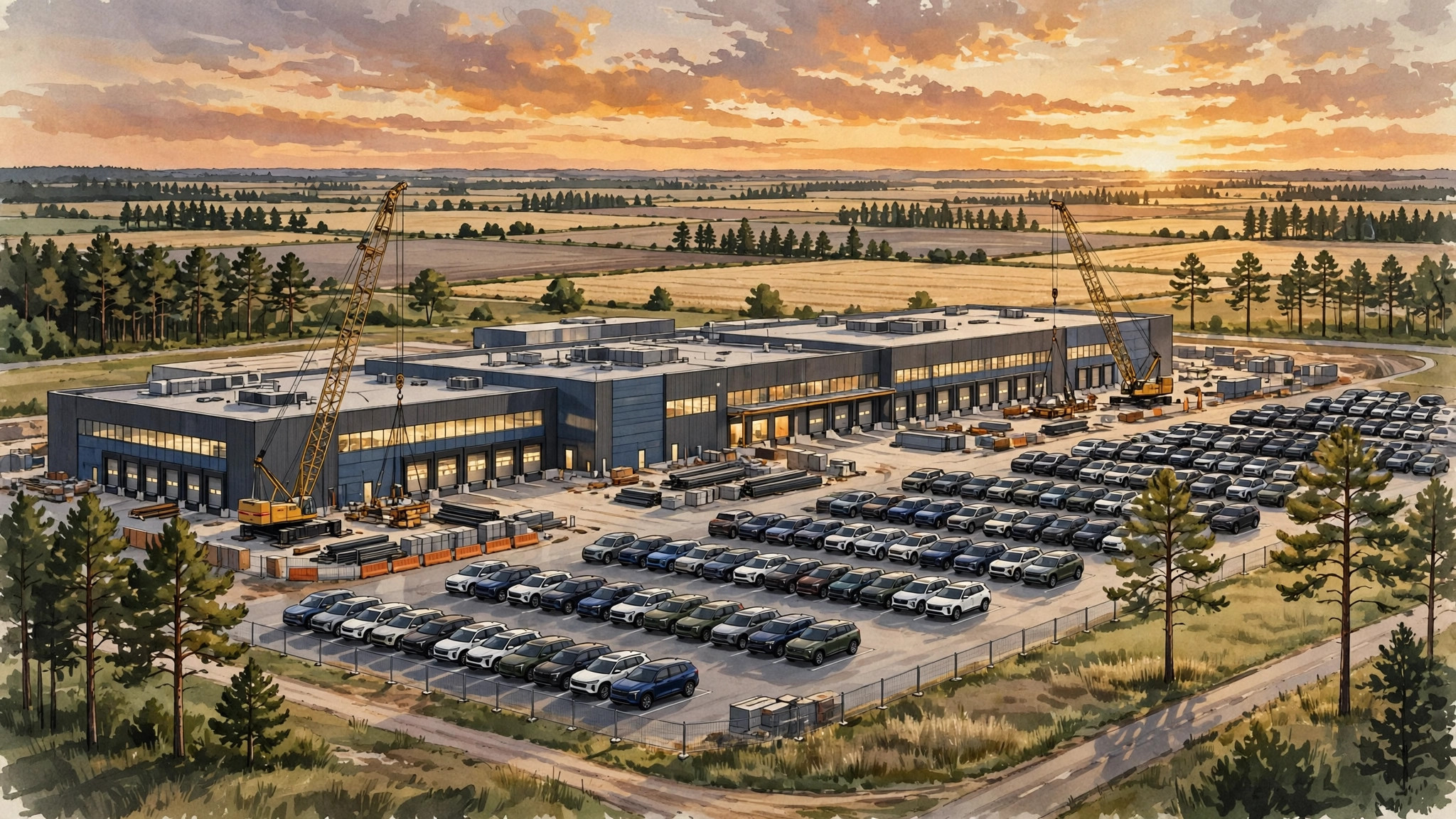
Audi will build its first factory in the United States, a roughly $4 billion plant in Peach County, Georgia, near Macon. The company says the plant will create about 4,500 jobs and build up to 200,000 premium SUVs a year.
President Donald Trump announced the plan on Saturday at a campaign rally in Perry, Georgia, with Audi chief executive Gernot Döllner joining him onstage. Audi confirmed the plan in its own news release the same day.
The plant will sit at the Middle Georgia Megasite, an industrial property marketed jointly by Peach, Houston and Macon-Bibb counties. Audi says it will build SUVs tailored to North American buyers there, and that local production will make North America a third major pillar of its production network, alongside Europe and China.
When it opens, and when it does not
No one will be hired at the plant next month. Audi says construction starts in 2027 and production begins in the early 2030s. The state timeline is more specific: site grading in 2027, construction in 2028 and full production in 2031.
That timeline differs from what Trump said onstage. He put the investment at $4.2 billion, not $4 billion, and said construction would begin next month. Audi and Gov. Brian Kemp’s office both say about $4 billion, and neither gives a 2026 start date.
Reuters reported, citing a U.S. official, that the plant will build Audi’s Q7, Q8 and Q9 SUVs, its largest and most premium models. Audi itself has said only that the plant will build premium SUVs for North American customers.
Why Georgia, and why now
Audi said Georgia offered an investment-ready site, a skilled workforce, an established supplier network and strong logistics. Döllner said the company had bigger ambitions in the American market than it had realized so far.
“We have much greater ambitions for Audi in America,” Döllner said in the company release. “The United States is one of the world’s most important premium markets, and we have not yet realized our full potential.”
Kemp said Georgia bought and improved the megasite for this purpose. “We are proud that Audi has selected Georgia as the home of their first U.S. manufacturing facility, delivering truly historic investment and jobs to middle Georgia,” he said.
Audi is the only German auto brand without a U.S. factory. Volkswagen, its corporate parent, builds cars in Tennessee. BMW and Mercedes-Benz both have plants in the South. Audi has so far sold cars in the United States that were imported from Europe or Mexico.
Trump credited his tariffs for the decision. The Associated Press reported that the announcement was timed to help Republican candidates in Georgia, 10 days before the November 3 midterms. Republican Rep. Mike Collins is challenging Democratic Sen. Jon Ossoff, and Republican Rick Jackson is running for governor against former Atlanta Mayor Keisha Lance Bottoms, a Democrat. Jackson thanked Trump at the rally for bringing what he called the biggest economic deal in Georgia history to the state.
That description does not match Georgia’s own record. The state’s economic development department lists Hyundai’s $7.59 billion Metaplant near Savannah, which promised at least 8,500 jobs, as the larger project. Trump also called the Audi plant the biggest single investment in U.S. auto industry history.
What is still unknown
Neither Audi nor the state has given wage figures for the 4,500 jobs. Kemp’s office said pay for all roles will be competitive and well-paying for the local market, but gave no numbers. Neither release lists tax breaks or other incentives offered by the state or local governments.
To prepare workers, the state’s Georgia Quick Start program will partner with local technical colleges, design a custom curriculum and build a dedicated training center before the plant is finished. Hiring dates have not been announced.
The plant is a long bet, in both directions. For Audi, it is a way to build its biggest SUVs where it sells them, instead of shipping them across an ocean. For Georgia, it is 4,500 jobs that will not exist until the 2030s, announced 10 days before an election.