Deisseroth, Hegemann and Nagel Win 2026 Nobel Medicine Prize for Optogenetics
Karl Deisseroth, Peter Hegemann and Georg Nagel won the 2026 Nobel Prize in Physiology or Medicine for their discoveries on light-gated ion channels, the work that made optogenetics possible.
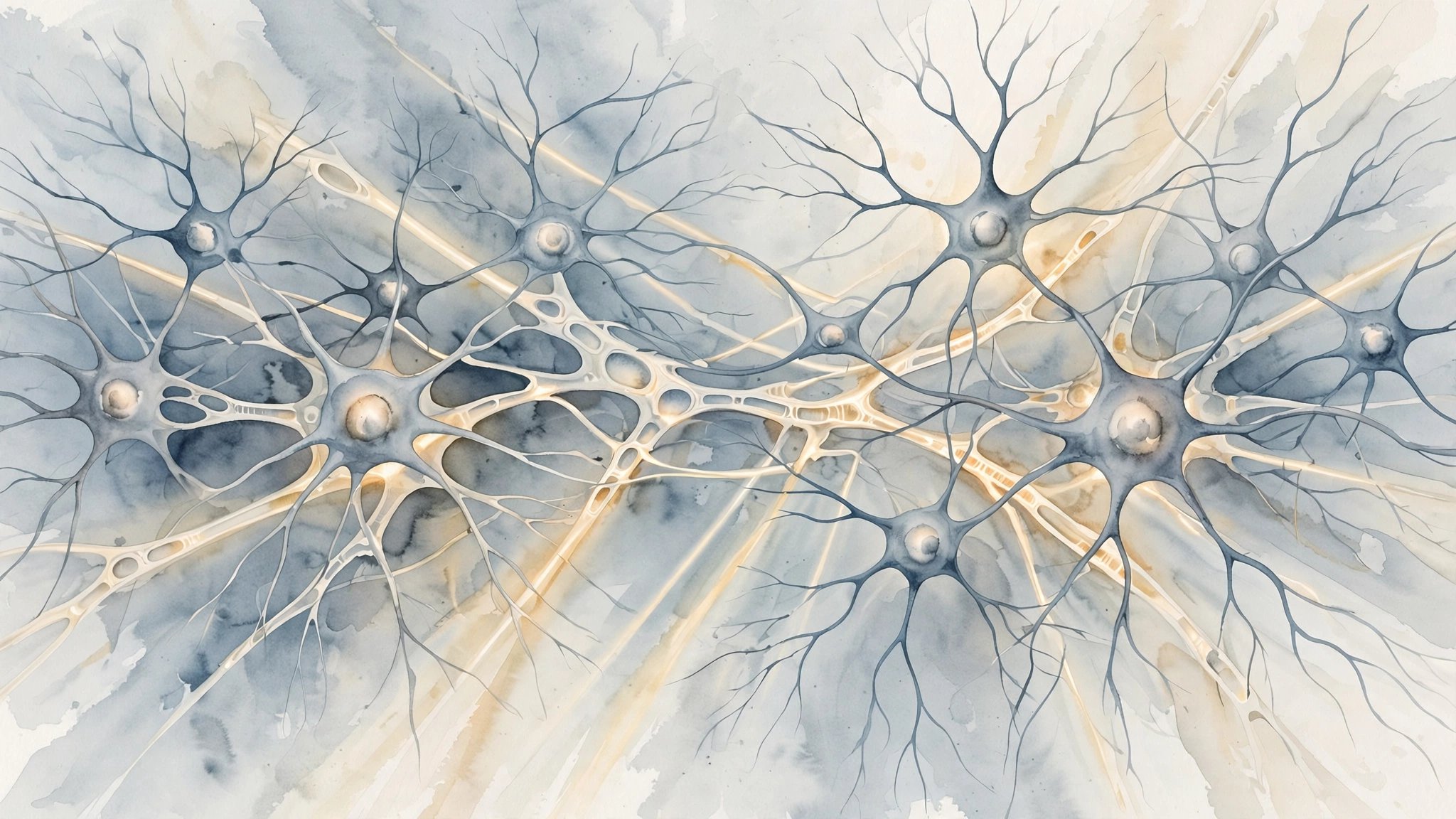
Karl Deisseroth, Peter Hegemann and Georg Nagel won the 2026 Nobel Prize in Physiology or Medicine on Monday. The award honors their work on optogenetics, a technique that lets scientists switch individual nerve cells in a living brain on and off with light.
The Nobel Assembly at Sweden's Karolinska Institutet said the three were recognized for “discoveries concerning light-gated ion channels and optogenetics.” Deisseroth, 54, is an American neuroscientist and physician at Stanford University. Hegemann, 71, works at Humboldt University in Berlin, and Nagel, 73, at the University of Würzburg. The laureates will share a prize of 12 million Swedish crowns, about $1.2 million.
The discovery began with pond algae. In the early 1990s, Hegemann was studying how the single-celled alga Chlamydomonas reacts to light in half a millisecond. He suspected that a single protein captured the light and acted as an ion channel, a gate in the cell's membrane.
Nagel tested the idea by injecting Chlamydomonas genes into frog eggs. The experiment turned up channelrhodopsin-2, an ion channel that opens when exposed to light. The German pair had found a light-sensitive switch in nature.
In 2005, Deisseroth introduced the channelrhodopsin gene into nerve cells taken from rats. Shining blue light on the cells triggered a nerve signal. Two years later, he showed the method worked in the brains of living mice.
The approach, called optogenetics, gave researchers a way to flip specific neurons on and off and study the brain circuits involved in memories, feelings and behavior. “This method is now being used in laboratories around the world to reveal the brain's mysteries,” said Thomas Perlmann, secretary-general of the Nobel Assembly. Committee member Anna Wedell called it a “light-sensitive switch” that could help scientists “map which cells are responsible for which function.”
The technique is already moving toward medicine. In clinical trials, researchers are restoring vision in people blinded by retinitis pigmentosa by inserting a light-sensitive protein into the retina. Scientists also hope it can improve cochlear implants by stimulating the auditory nerve more precisely than today's electrical devices.
The medicine prize traditionally opens the annual Nobel announcements, with the prizes in physics, chemistry, literature, peace and economics to follow over the coming days. Last year's medicine prize went to Americans Mary Brunkow and Fred Ramsdell and Japan's Shimon Sakaguchi for work on how the immune system spares healthy cells.
The five original Nobel Prizes were established under the will of Swedish inventor Alfred Nobel and have been awarded since 1901. A sixth prize, in economics, was created in 1968 by Sweden's central bank.