Trump Sends a Third Aircraft Carrier to the Middle East as a Post-Midterm Iran Assault Looms
U.S. officials told the Wall Street Journal the Pentagon is sending the USS Theodore Roosevelt strike group and thousands more Marines to the region, and that President Trump expects to resume bombing Iran in November.
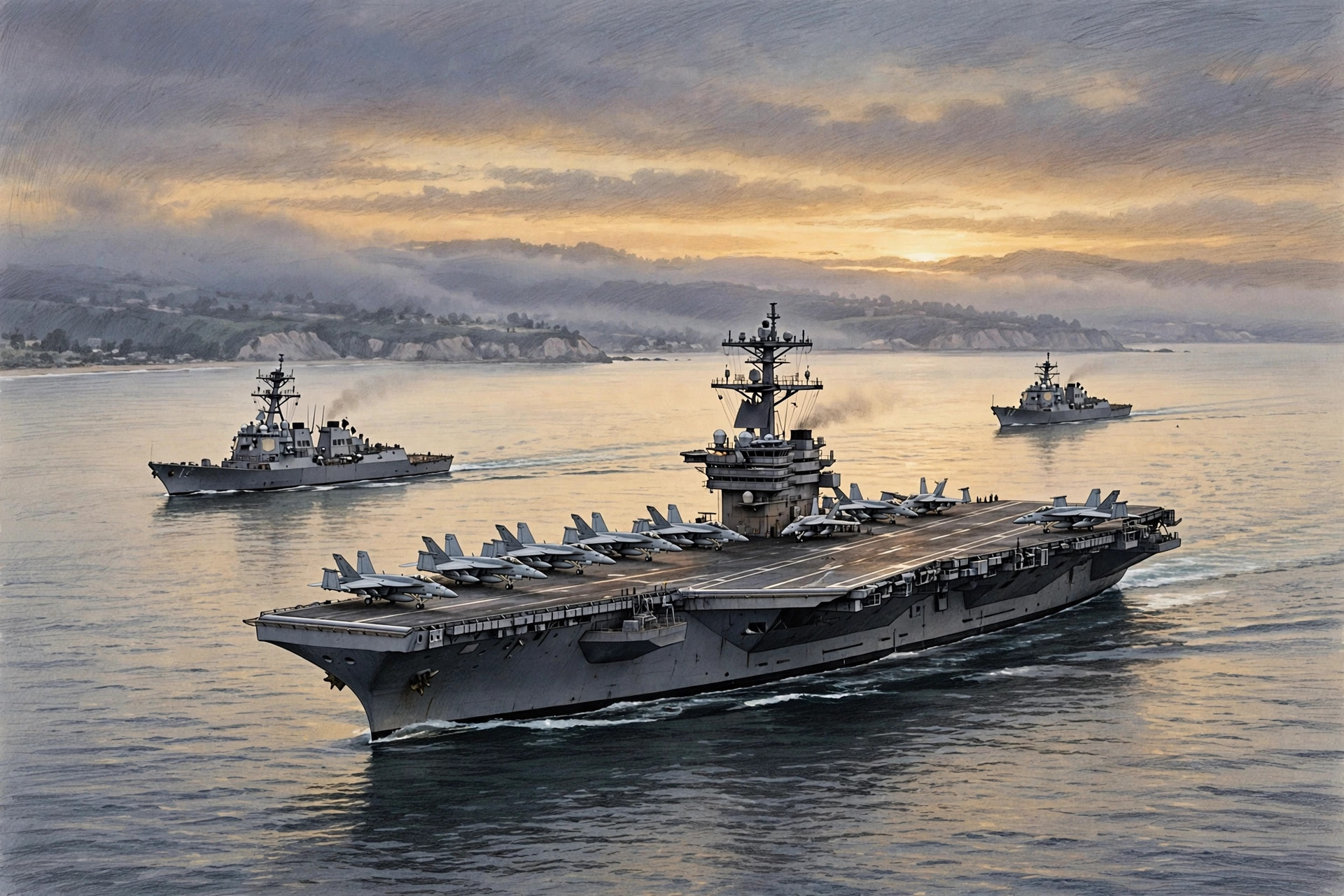
The Pentagon is sending a third aircraft-carrier strike group to the Middle East. U.S. officials told the Wall Street Journal the move adds 9,000 to 10,000 troops to the region, and that President Donald Trump recently told aides he expects to resume bombing Iran in November.
The carrier USS Theodore Roosevelt left its home port in San Diego on Sunday on a scheduled deployment. The USS Makin Island Amphibious Ready Group, three amphibious ships carrying Marines from the 13th Marine Expeditionary Unit, left on Monday. The ships, jet fighters, Marines and sailors will arrive in the region by the end of November, the officials said.
Two carriers are already there. The USS George H.W. Bush and the USS George Washington are stationed in the Middle East, the latter having relieved the USS Abraham Lincoln in August after a record-setting deployment. If the Washington stays in the region after the Roosevelt arrives, it would bring the number to three carrier strike groups for the first time since April.
It is possible the Washington instead leaves for its home port in Japan, which would bring the force back down to two carriers, the officials said. Either way, the additional ships will add to the more than 50,000 troops already in the region.
A separate U.S. official, speaking to the Australian Associated Press on Thursday, said a group of ships carrying more than 7,000 sailors and 2,000 Marines is heading to the Middle East. The official said three carriers could be in the region by the end of October — an unusually large naval presence of more than 20,000 sailors and Marines and hundreds of aircraft.
Trump himself said a new assault is possible. In an interview with Time magazine conducted Monday, he said it was “possible” he would order a ramping up of bombing in Iran after the midterm elections. Pressed on where, he said: “I can’t tell you that.”
Trump also said in the interview that he had rejected Iran’s latest ceasefire proposal because it was “not good enough.” Iran had offered to “open up” the Strait of Hormuz as part of the deal. The war has stretched past seven months; a fragile ceasefire agreed in April collapsed, and the two sides have fought sporadically since.
The White House and the Pentagon did not respond to requests for comment on the Journal’s report.