Israel Votes in First Election Since the October 7 Attacks
Polls opened Tuesday for all 120 Knesset seats, with Benjamin Netanyahu seeking to stay in power and final polls pointing to a tight race — and no bloc near a majority.
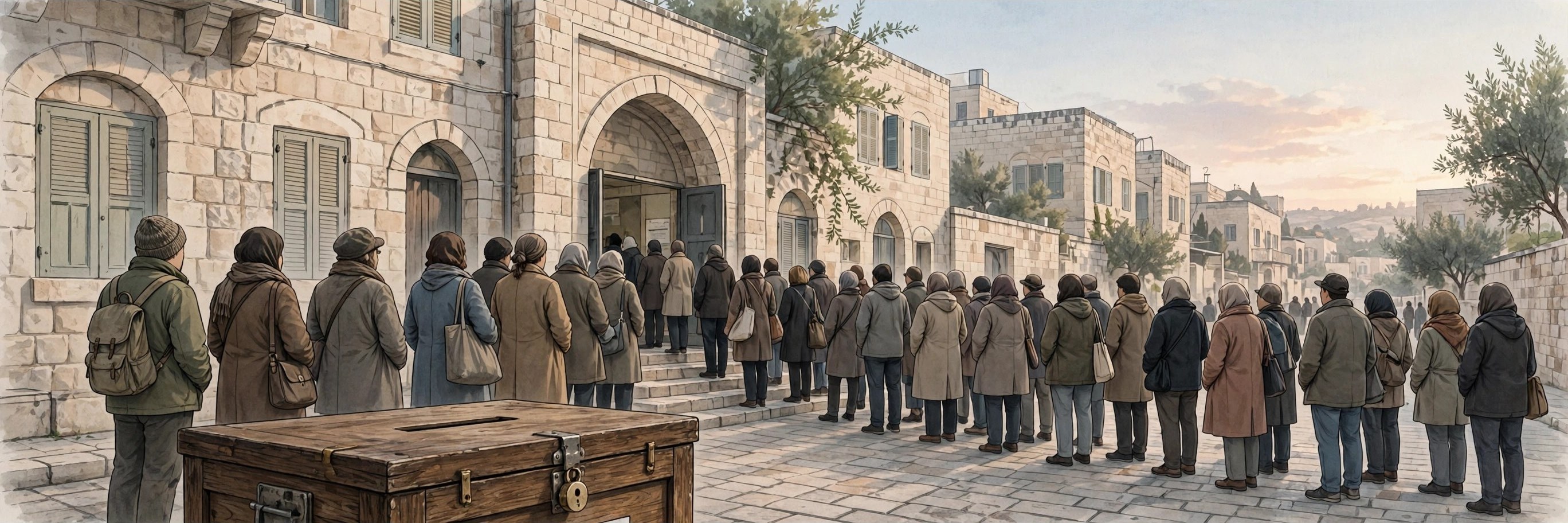
Polls opened at 7 a.m. local time Tuesday across Israel for the election to the 26th Knesset. Voting runs until 10 p.m. local time. It is the country’s first national election since the Hamas-led attacks of October 7, 2023.
About 7.33 million Israelis are eligible to vote, according to Central Elections Committee figures. That includes about 330,000 first-time voters. The committee listed 12,018 regular polling stations, including 6,208 accessible stations. Military voting began on October 21.
Voters choose party lists, not a prime minister directly. A list must win at least 3.25 percent of valid votes to enter the Knesset. Sixty-one of the 120 seats are needed for a majority, and no single party has ever won one outright.
Netanyahu against Eisenkot
Prime Minister Benjamin Netanyahu, 77, leads Likud. He is Israel’s longest-serving prime minister. His main rival is Gadi Eisenkot, 66, a former chief of staff of the Israel Defense Forces who leads the Yashar party.
Netanyahu has campaigned on security and his experience. He has pointed to Israel’s military campaigns since October 7 and warned of the threat from Iran. In a video this week he stood beside a missile-defense battery and warned Tehran it would face “a devastating blow” if it attacked Israel.
The parties seeking to replace him argue the government bears responsibility for the failures around October 7 and that a change of leadership is needed. The campaign has also turned on military-service exemptions for ultra-Orthodox men, the judicial overhaul that drew mass protests before the war, and the direction of the state.
President Donald Trump has endorsed Netanyahu ahead of the vote.
Final polls point to deadlock
The final polls from Israel’s three major television networks put Yashar ahead of Likud, with Yashar at about 22 to 23 seats and Likud at about 19 to 21. But neither bloc is projected to reach 61 seats. One summary put the Netanyahu-led bloc at about 50 seats and the main opposition bloc at about 52 to 56. Another model put the Netanyahu bloc at 53, the anti-Netanyahu Zionist bloc at 51, and Arab lists at 15.
One pollster stood apart. Channel 14 put Likud at 30 seats and the Netanyahu bloc at 62, above the majority line. Israeli polls have missed the final outcome by wide margins before. These are projections, not results.
Arab-led parties could emerge as kingmakers if neither main bloc can reach a majority on its own. That could set off weeks of coalition negotiations. If neither side can form a government, Netanyahu could remain as caretaker prime minister until another election.
What happens next
Exit polls are expected after polling stations close. Official results are expected around November 4. Election day is a national holiday in Israel, with schools and most workplaces closed.
The October 7 attacks killed about 1,200 people in Israel and saw 251 taken hostage, setting off the war in Gaza and related conflicts across the region. The outgoing 25th Knesset was the first Israeli legislature to complete a full four-year term without early dissolution since 1988.